
Eugenia Brodsky on the Evolution of Visual Narrative and Aesthetic Refinement: Chrysanthemum

View Gallery
26 Photos



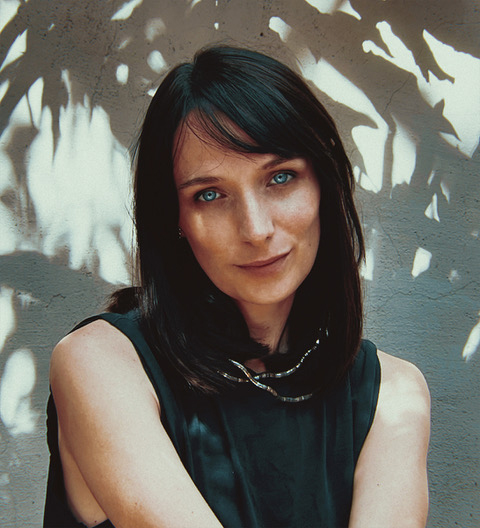
Eugenia Brodsky is a contemporary photographer whose work merges fashion aesthetics with a deeply personal artistic vision. Drawing on her experience in fashion photography and the film industry, she creates images that reveal the depth of human presence and the subtle layers of experience within each frame. Her projects explore the interplay of light, color, and space, crafting visual narratives that immerse the viewer in her perspective. Brodsky’s work has been exhibited internationally, engaging audiences across multiple cultural contexts and contributing to the evolving conversation in contemporary photography.
When did you realize that your photography was moving beyond fashion and becoming an independent artistic language?
When I first started photographing, I was drawn primarily to fashion, captivated by imagined worlds, elaborate outfits, and unconventional presentations of characters. Gradually, my focus shifted toward people who carry the monologues of their own stories, emotions, and experiences. I realized that these inner narratives give fashion photography its true depth. I began to explore new dimensions in imagery, including time, memory, and emotion, and my photography gained renewed meaning. Each image became a fragment without a clear beginning or end, a fleeting moment connecting the model, the photographer, and the viewer in a shared, suspended instant.
How has your experience in the fashion industry influenced your personal projects, allowing you to blend aesthetic refinement with emotional depth?
Creating fashion stories requires the ability to work with a series of images to fully develop a concept through outfits and visual narratives. My experience in the film industry, along with producing series for fashion publications, taught me how to construct photographic stories with rhythm, continuity, and atmosphere. Over time, the images began to resonate with an invisible thread of my personal emotions, giving the series new depth and meaning. What began as a visual experiment gradually evolved into a narrative reflecting memory, feeling, and personal experience.
Do you feel that your practice has become part of a broader professional dialogue?
Yes, I do. As my projects were presented in exhibitions and publications, I started to see my work not only as a personal exploration but also as a contribution to the ongoing conversation in contemporary photography. Being part of this dialogue involves engaging with other artists, curators, and viewers, exchanging ideas and perspectives. It is both inspiring and humbling to realize that the images I create can resonate beyond my own experience, shaping how others perceive emotion, memory, and narrative in the visual world.
In what way is your method unique, what sets it apart from traditional fashion photography?
For me, the uniqueness of my method lies in the way I combine color and light. I have developed a particular sensitivity to space and am able to translate that perception onto film. When I shoot, I follow my own rhythm, seeing the world through the viewfinder as if it is a separate universe. When a moment moves me deeply, I press the shutter. Each photograph reflects this intimate experience, capturing everything in the frame, including the models, from my point of view. It is a personal record of a fleeting instant, suspended in my vision of the world.
What role do you believe an artist plays in today’s rapidly changing visual world?
Our world is changing at an unprecedented pace, and we are witnesses to these transformations. Time seems to accelerate, new technologies emerge, and art stands at the threshold of an evolutionary shift that merges humanity and innovation. Yet I believe that one of the most important tasks of a person is creation. Through creating, we bring a spark of life into the material world, choose love, and share our light with viewers, connecting hearts in a shared rhythm and direction. In shaping a new reality, the artist plays a central and vital role.
ABOUT THE PROJECT
Chrysanthemum Artist Statement :
Before the white chrysanthemum
the scissors hesitate a moment (Yosa Buson)
A poem once touched me with a simple truth: even death pauses before the beauty of life. It made me realize what stops time for me – my children, the most fragile and tender beauty I know. Childhood became, in my mind, a fleeting flower that one day will be cut.
My eldest son is eleven, standing between boyhood and adolescence. Sometimes I see in his eyes a soft adult sadness, the first quiet touch of growing up.
I remember my own childhood light, not just illumination, but a living companion that guided me. Its gradual departure leaves a trace of melancholy, yet returns when the soul is ready.
This project is about childhood as a home of light, and about the first steps away from it – that delicate moment when innocence begins to shift and time holds its breath.


